

Updated and tested in September 2026
PicWish is the best AI image denoiser for users who want to remove grain, color noise, and compression artifacts online without learning complex photo-editing software. It processes images automatically in a browser and is particularly convenient for portraits, product photos, smartphone pictures, and scanned images.
Professional photographers working extensively with RAW files may prefer DxO PureRAW, Adobe Lightroom, or Topaz Photo for their advanced controls and camera-specific workflows. For quick everyday edits, however, an online tool such as PicWish AI Image Denoiser offers a much simpler solution.
Best AI Image Denoisers at a Glance
| AI denoiser | Best for | Platform | RAW support | Ease of use |
|---|---|---|---|---|
| PicWish AI Image Denoiser | Fast online denoising | Web | No | Very easy |
| Topaz Photo | Detail recovery and enhancement | Windows, macOS | Yes | Easy |
| Adobe Lightroom | Complete RAW workflows | Desktop, mobile, web | Yes | Intermediate |
| DxO PureRAW | High-ISO RAW photography | Windows, macOS | Yes | Easy |
| ON1 NoNoise AI | Adjustable professional denoising | Windows, macOS | Yes | Intermediate |
| Luminar Neo | Creative AI photo editing | Windows, macOS | Yes | Easy |
| VanceAI Image Denoiser | Quick browser-based editing | Web, Windows | No | Very easy |
| Nero AI Image Denoiser | Simple online noise removal | Web | No | Very easy |
| Evoto AI | Portrait and studio workflows | Desktop, mobile, web | Yes on supported workflows | Intermediate |
| Picsart | Social media and casual editing | Web, mobile | No | Very easy |
Our recommendations: Choose PicWish for fast online processing, DxO PureRAW for demanding RAW files, Lightroom for an integrated photography workflow, and Topaz Photo when you need denoising, sharpening, and upscaling together.
How We Selected the Best AI Denoisers
Not every photo enhancer is a true image denoiser. To make this comparison useful, we focused on tools that can directly reduce visible noise or include a dedicated AI noise-reduction function.
The main evaluation criteria were:
- Noise removal: How effectively the tool reduces luminance noise, color speckles, and compression artifacts.
- Detail preservation: Whether hair, skin, text, foliage, fabric, and other fine elements remain recognizable.
- Natural results: Whether the result avoids a waxy, blurry, or overprocessed appearance.
- Ease of use: How much editing experience is required.
- Processing speed: How quickly users can obtain a usable result.
- Format support: Whether the tool works with common formats or professional RAW files.
- Workflow: Availability online, on desktop, on mobile, or as a photo-editing plugin.
- Best use case: The type of image and user for which each tool is most appropriate.
For the most reliable visual comparison, every tool should be tested using the same images, including a low-light portrait, a high-ISO wildlife photo, a night scene, and a compressed product image.
1. PicWish AI Image Denoiser — Best Overall Online AI Denoiser
PicWish AI Image Denoiser is designed for people who want to clean noisy images without downloading professional software or adjusting complicated sliders.
The tool automatically detects visual noise and reduces unwanted grain, color noise, and compression artifacts. At the same time, it works to retain important details so that portraits, product images, and everyday photos remain clear and natural.
Unlike the general PicWish photo-enhancement tool previously featured in this guide, this new product is specifically designed for image denoising.
Best for: Fast online denoising for everyday photos.
Key features:
- AI-powered image noise reduction
- Automatic browser-based processing
- Reduction of grain and colored noise
- Removal of JPEG and compression artifacts
- Detail preservation
- No software installation required
- Suitable for portraits, products, scans, and low-light photos
Pros:
- Very easy for beginners
- Produces results in a few steps
- Works directly in a browser
- No manual selections or masks required
- Suitable for several common types of image noise
Cons:
- Not intended as a complete RAW-development application
- Professional photographers may need more manual control
Verdict: PicWish is the most practical choice when you need a dedicated, accessible AI denoiser rather than a full professional photo-editing suite.
2. Topaz Photo — Best for Denoising and Detail Recovery
Topaz Photo combines several image-quality operations in one workflow. It can reduce noise, sharpen soft details, and upscale an image, making it useful when a photo suffers from more than one quality problem.
Its automatic analysis helps users decide which corrections an image may need. More experienced editors can then adjust the result to prevent excessive smoothing or sharpening.
Best for: Photographers who want denoising, sharpening, and upscaling in one desktop application.
Key features:
- AI noise reduction
- RAW image support
- Detail recovery
- AI sharpening
- Image upscaling
- Local adjustments
- Batch processing
Pros:
- Strong detail preservation
- Useful for complex image-quality problems
- Supports professional files and larger images
- Offers more control than most online tools
Cons:
- Requires desktop installation
- Can be demanding on older computers
- More expensive and complex than a simple online denoiser
Verdict: Choose Topaz Photo when detail recovery is a priority and you want several enhancement tools inside one workflow.
3. Adobe Lightroom — Best for an Integrated RAW Workflow
Adobe Lightroom is a natural choice for photographers already using the Adobe ecosystem. Its AI-powered Denoise feature works within a broader RAW-editing workflow that includes exposure, color, masks, lens corrections, and image organization.
The main advantage is continuity: photographers can denoise an image and continue editing without transferring it to a separate application.
Best for: Photographers who already edit and organize RAW photos in Lightroom.
Key features:
- AI-powered RAW denoising
- Luminance and color noise controls
- Non-destructive photo editing
- Selective adjustments and masking
- Camera and lens profiles
- Cloud-based organization options
Pros:
- Fits naturally into a professional workflow
- Provides extensive editing controls
- Good RAW-file support
- Useful for processing complete photo shoots
Cons:
- Requires a subscription
- More complicated than one-click online tools
- Excessive adjustments can remove natural texture
Verdict: Lightroom is the best option for users who need noise reduction as one part of a complete RAW photography workflow.
4. DxO PureRAW — Best for High-ISO RAW Photos
DxO PureRAW specializes in improving RAW files before they enter the main editing stage. Its denoising technology combines noise reduction with lens corrections, demosaicing, and detail recovery.
It is particularly relevant for high-ISO images captured in difficult lighting, such as wildlife, sports, events, and night photography.
Best for: Professional or enthusiast photographers processing noisy RAW images.
Best for: DSLR and mirrorless RAW photo processing
Key features:
- RAW-focused noise reduction
- Camera and lens profiles
- Optical corrections
- High-ISO image processing
- Detail and sharpness recovery
- Batch workflow
Pros:
- Excellent for demanding RAW files
- Automatically applies camera-specific corrections
- Preserves small details effectively
- Integrates with established photography workflows
Cons:
- Not designed primarily for ordinary JPG or PNG editing
- Creates an additional step before final editing
- More than casual users need for occasional photos
Verdict: DxO PureRAW is a strong choice when maximum RAW quality matters more than speed or browser-based convenience.
5. ON1 NoNoise AI — Best for Adjustable Noise Reduction
ON1’s noise-reduction technology is aimed at photographers who want AI assistance without giving up manual control. Users can balance noise removal, sharpness, and detail according to the image.
It can fit into a broader ON1 workflow or be used alongside other professional editing applications.
Best for: Photographers who want more control over AI denoising.
Key features:
- AI noise reduction
- RAW support
- Adjustable detail controls
- Sharpening tools
- Batch processing
- Standalone and plugin workflows
Pros:
- Good balance between automation and control
- Suitable for high-ISO photography
- Supports professional file types
- Useful for processing multiple images
Cons:
- Interface may take time to learn
- Requires installation
- Too advanced for users seeking a quick single-image fix
Verdict: ON1 is best suited to photographers who want to fine-tune the strength of denoising instead of accepting a completely automatic result.
6. Luminar Neo — Best All-in-One Creative AI Editor
Luminar Neo combines noise reduction with creative photo-editing functions. It is less specialized than dedicated RAW processors, but it offers a convenient environment for improving an image and then applying additional adjustments.
Its accessible interface makes it an attractive middle ground between basic online tools and traditional professional editors.
Best for: Content creators who want denoising and creative editing in one application.
Key features:
- AI noise reduction
- General photo enhancement
- Portrait tools
- Relighting and color adjustments
- Object-removal functions
- Layer-based creative editing
Pros:
- Beginner-friendly interface
- Broad selection of AI editing tools
- Suitable for both corrections and creative effects
- Less intimidating than some professional editors
Cons:
- Not as specialized as dedicated denoising software
- Some workflows require additional modules or plans
- Multiple enhancements can create an overprocessed result
Verdict: Luminar Neo is a good choice when noise removal is only one part of a larger creative transformation.
7. VanceAI Image Denoiser — Best PicWish Alternative Online
VanceAI provides an online denoising workflow aimed at users who do not want to install desktop software. It can reduce grain and other artifacts while applying additional sharpening or enhancement.
Its accessibility makes it comparable to PicWish, although users should evaluate the final texture carefully when applying several enhancement functions together.
Best for: Quick browser-based denoising and enhancement.
Key features:
- Online AI denoising
- Grain and sensor-noise reduction
- Compression-artifact removal
- Sharpness adjustments
- Browser and desktop options
Pros:
- No advanced editing experience required
- Accessible from a web browser
- Combines denoising with other enhancements
- Suitable for occasional edits
Cons:
- Some exports and advanced usage may require payment
- Aggressive processing can alter fine textures
- Less suitable for complete RAW workflows
Verdict: VanceAI is a convenient alternative for users comparing browser-based image denoisers.
8. Nero AI Image Denoiser — Best for Simple Automatic Processing
Nero AI Image Denoiser offers a straightforward online experience. It focuses on automatically cleaning noisy images rather than providing the extensive controls found in Lightroom or ON1.
This simplicity is helpful for beginners, but advanced photographers may find the adjustment options limited.
Best for: Occasional users who prioritize ease of use.
Key features:
- Web-based processing
- Automatic AI noise reduction
- Simple upload-and-process workflow
- Common image-format support
- No professional editing knowledge required
Pros:
- Very easy to operate
- Works without desktop installation
- Convenient for quick edits
- Suitable for casual photography
Cons:
- Limited professional controls
- Not built around RAW photo development
- Results depend heavily on automatic processing
Verdict: Nero is most useful when convenience is more important than granular control.
9. Evoto AI — Best for Portrait and Studio Workflows
Evoto is primarily aimed at portrait, event, and studio photographers. Its denoising functions sit alongside skin retouching, color correction, masking, and other batch-editing tools.
It can therefore help professionals maintain a consistent look across several portraits while correcting noise caused by indoor or low-light shooting conditions.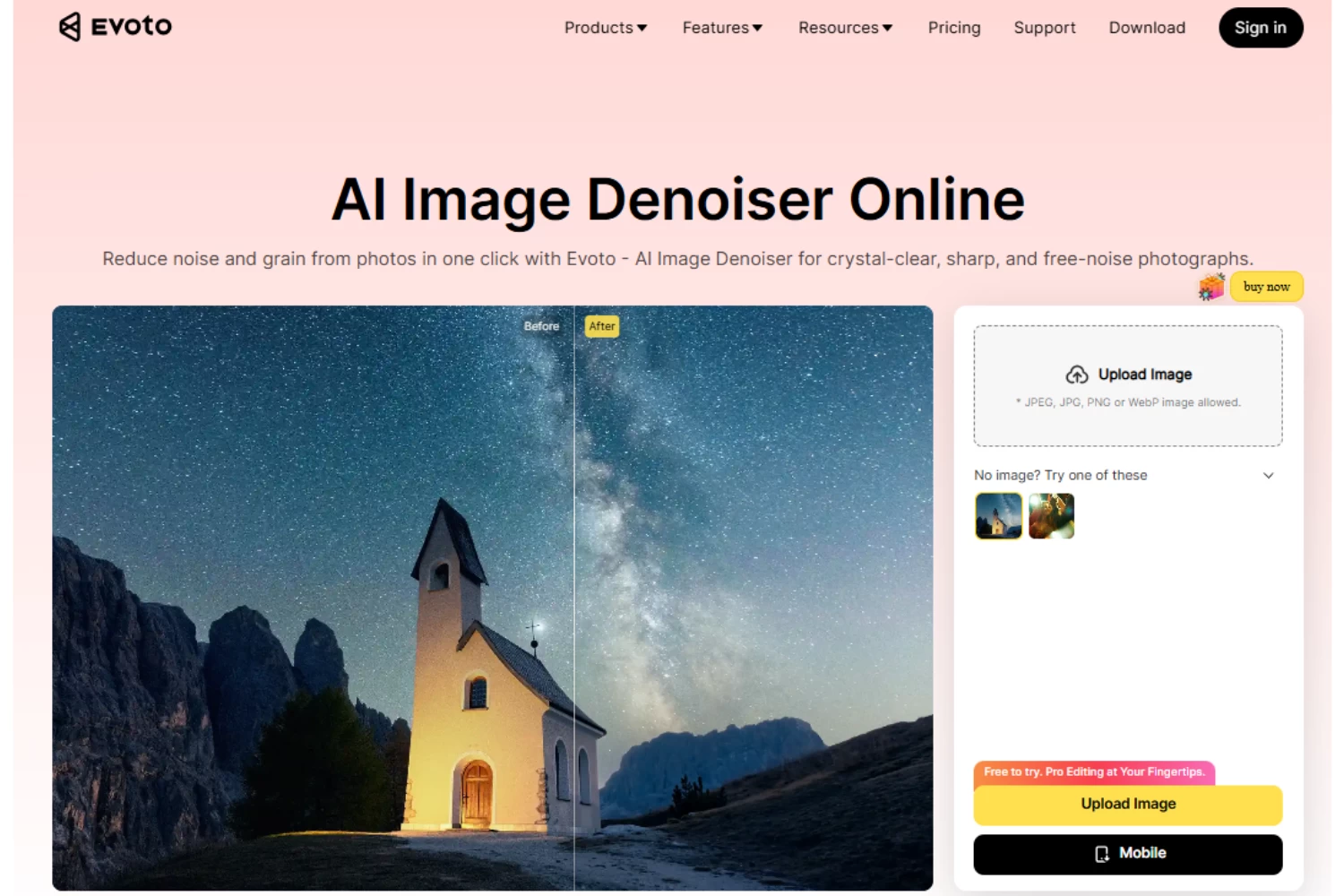
Best for: Portrait photographers and high-volume studio editing.
Key features:
- Image and color noise reduction
- Portrait retouching
- Detail and sharpness adjustments
- Batch-editing workflow
- Color and lighting correction
- Desktop-oriented professional tools
Pros:
- Useful for processing portrait sessions
- Combines denoising and retouching
- Supports consistent adjustments across several photos
- Provides more control than basic online tools
Cons:
- Excessive portrait processing can look unnatural
- More complex than a dedicated one-click denoiser
- Not necessary for isolated everyday photos
Verdict: Evoto is worth considering when denoising is part of a larger portrait-retouching workflow.
10. Picsart — Best for Social Media Images
Picsart integrates denoising and enhancement tools into a broader content-creation platform. After cleaning an image, users can add text, resize it, apply effects, or prepare it for a social media post.
Its denoising functionality is convenient, although it is not designed to replace professional RAW software.
Best for: Social media creators and casual mobile editing.
Key features:
- AI image enhancement
- Noise and grain reduction
- Mobile and web editing
- Templates and design tools
- Filters, effects, and text
- Social media export options
Pros:
- Easy to use on mobile devices
- Combines photo correction and content design
- Good for quick social media workflows
- Wide selection of additional creative tools
Cons:
- Limited professional denoising controls
- Some results may look heavily enhanced
- Not suitable for a dedicated RAW workflow
Verdict: Picsart is useful when you want to clean and repurpose an image for social media in the same application.
Which AI Denoiser Should You Choose?
The best tool depends on the image, the file type, and what you plan to do after denoising.
| Your situation | Recommended tool |
|---|---|
| You want to denoise an image online quickly | PicWish |
| You are a beginner | PicWish or Nero |
| You edit professional RAW photos | DxO PureRAW or Lightroom |
| You need denoising and sharpening together | Topaz Photo |
| You want detailed manual controls | ON1 NoNoise AI |
| You need creative editing tools too | Luminar Neo |
| You process many portraits | Evoto |
| You create social media content | Picsart |
| You want an alternative online tool | VanceAI |
A complex desktop application does not automatically produce the best result for every user. If the source image is a JPG, PNG, smartphone picture, scan, portrait, or product photo, a specialized online denoiser may be faster and more appropriate than a complete RAW editor.
How to Denoise an Image Online with PicWish
You can remove visible image noise with PicWish in three steps.
Step 1: Upload the Noisy Image
Open PicWish AI Image Denoiser and upload the image you want to improve.
Choose a photo affected by grain, colored speckles, low-light noise, or visible compression artifacts.
Step 2: Let AI Reduce the Noise
Select the appropriate enhancement option if one is available, then start processing.
PicWish analyzes the photo to identify visual noise while retaining important areas such as faces, object contours, text, hair, and surface textures.
Step 3: Preview and Download
Compare the processed image with the original. Pay particular attention to faces, shadow areas, edges, and small textures. Once you are satisfied with the result, download the denoised image.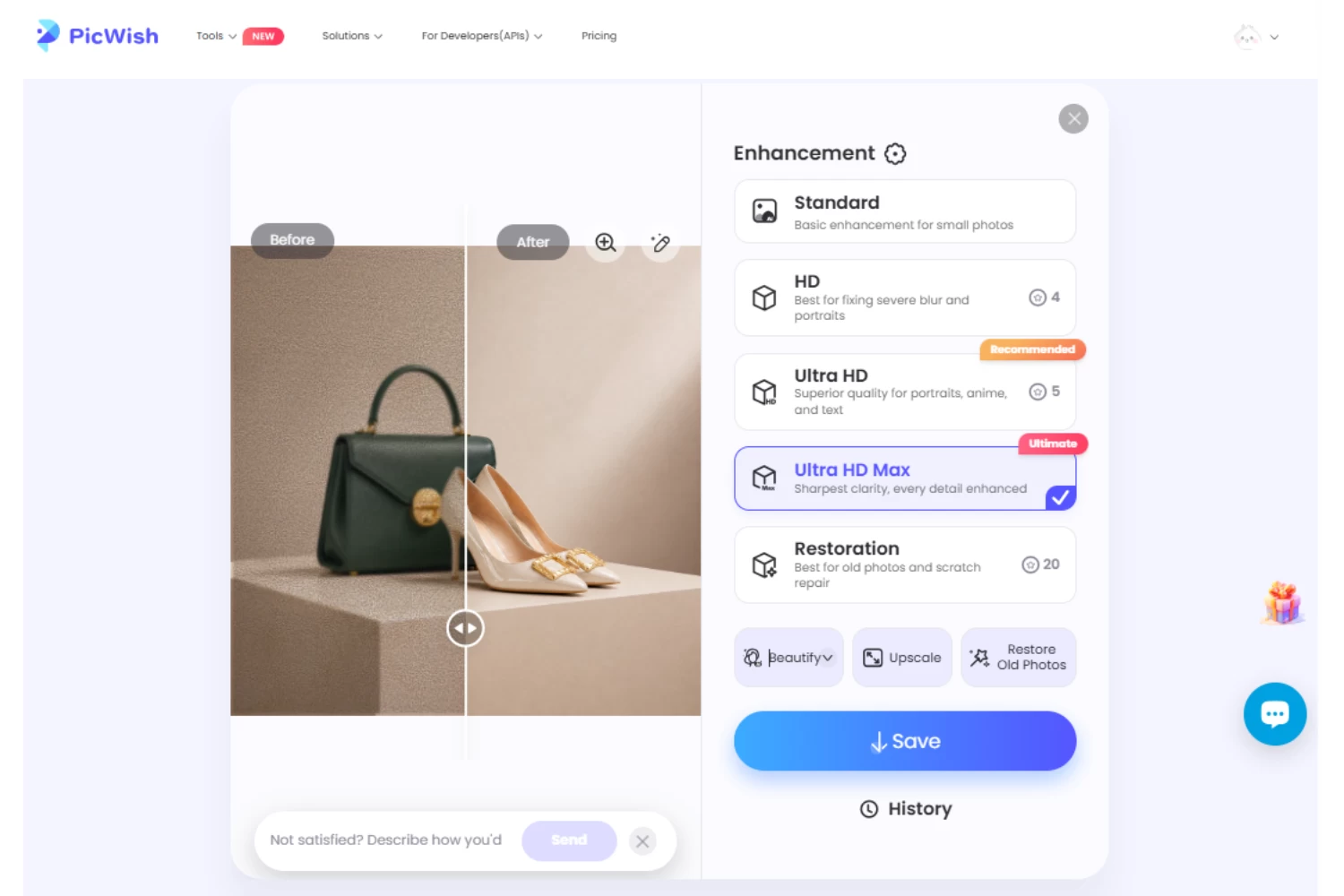
FAQs
❓What is the best AI image denoiser?
PicWish is one of the best options for quickly denoising JPG and PNG images online because it is automatic and does not require professional editing skills. DxO PureRAW and Lightroom are better suited to advanced RAW photography, while Topaz Photo is useful for combined denoising, sharpening, and upscaling.
❓Is there a free AI image denoiser?
Several online platforms allow users to try AI denoising without installing software. PicWish provides a convenient online starting point. Usage limits, output resolution, and premium options may vary, so check the current conditions before processing a large number of images.
❓Can AI completely remove noise from an image?
AI can significantly reduce visible grain and color noise, but extremely strong processing may also remove genuine details. The goal should be to create a natural balance between noise reduction and texture preservation rather than eliminating every variation in the image.
❓Does denoising make a photo blurry?
Poor or excessive denoising can soften an image. A well-designed AI denoiser identifies the difference between random noise and meaningful detail, reducing grain while retaining important edges and textures.
❓Should I denoise or sharpen an image first?
In most workflows, noise reduction should be applied before sharpening. Sharpening a noisy image can emphasize grain and colored artifacts, making them harder to remove naturally.
❓Can an AI denoiser fix blurry photos?
Denoising and deblurring solve different problems. A denoiser removes grain and colored speckles, while a deblurring tool attempts to correct soft details caused by movement or poor focus. Some AI editors offer both functions, but they should be evaluated separately.
❓Can AI remove JPEG artifacts?
Yes. Some AI denoisers can reduce compression artifacts such as blockiness, halos, and rough edges. Results depend on how severely the original image was compressed.
❓Can I denoise old scanned photos?
Yes. AI denoising can reduce scan grain, color speckles, and some compression artifacts. If the photograph also contains scratches, fading, or missing areas, use an old-photo restoration tool after addressing the noise.
❓What is the best denoiser for RAW photos?
DxO PureRAW, Adobe Lightroom, ON1, and Topaz Photo are strong options for RAW photography. They provide camera-oriented processing and more control than most browser-based denoisers.
❓Is an online AI image denoiser safe?
Use a reputable provider and review its privacy and file-retention policy before uploading confidential or sensitive photos. Avoid making universal privacy claims unless the provider clearly states how uploaded files are processed and deleted.
Final Verdict
There is no single AI image denoiser that fits every photography workflow.
DxO PureRAW and Lightroom are strong choices for photographers working with RAW files. Topaz Photo is useful when an image needs denoising, sharpening, and upscaling together. ON1 provides additional manual control, while Evoto is better suited to portrait-production workflows.
For most users who simply need to remove grain, color noise, or compression artifacts from a regular image, PicWish offers the most direct solution. It works online, requires no complicated editing setup, and makes AI noise reduction accessible to beginners as well as content creators.




Leave a Comment